


Precast Concrete Making Machine
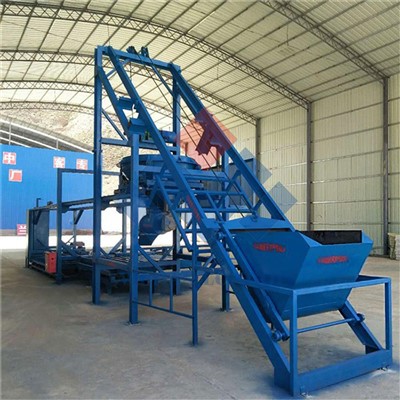
Longqi Precast Concrete Making Machine is specialized industrial equipment designed to automatically manufacture concrete components in a factory setting (precast yard) using reusable molds. These machines allow the mass production of concrete elements like walls, slabs, beams, columns, manholes, curbs, and more — before installation at a construction site.
Concrete Precast Machinery for Jersey Barriers And Guard Rail,Types of Precast Concrete Production Line For Sale




What Is a Precast Concrete Component?
A Precast Concrete Component is a concrete element that is manufactured in a controlled factory environment using reusable molds, then transported to the construction site for installation.
Unlike cast-in-place concrete, precast parts are made off-site, ensuring better quality control, faster construction, and lower labor cost.
Why Are Precast Concrete Components Needed?
Faster Construction
No waiting for on-site concrete to cure
Simultaneous production and site work
Better Quality Control
Produced in factory-controlled conditions
Consistent dimensions and surface finish
Cost Efficiency
Reduced labor and formwork on site
Reuse of molds lowers per-unit cost
Weather Independence
Production not delayed by rain or heat
Installation can be done in various climates
Durability and Safety
Designed to last decades
Excellent fire, seismic, and load performance
Sustainability
Reduced waste, better use of materials
Often made with recycled or local materials
Types of Precast Concrete Components
Structural Components
Used to carry load in buildings, bridges, and industrial plants.
| Component | Description |
|---|---|
| Beams | Horizontal load-bearing elements |
| Columns | Vertical supports for roofs and slabs |
| Slabs | Floor or roof sections (solid, hollow-core, waffle, etc.) |
| Walls (Load-bearing) | Structural wall elements |
| Staircases | Precast steps and flights |
| Girders | Heavy-duty horizontal supports in bridges |
Architectural Components
Focus on building appearance and finishing.
| Component | Description |
|---|---|
| Facade Panels / Cladding | Decorative or insulated panels on building exteriors |
| Decorative Columns / Cornices | Aesthetic classical features |
| Window and Door Frames | Enhances visual design, often colored/textured |
Infrastructure & Utility Components
Used in roads, bridges, drainage, and public works.
| Component | Description |
|---|---|
| Concrete Pipes | For sewage, stormwater, or culverts |
| Manholes / Chambers | Underground utility access units |
| Box Culverts | For water flow under roads and railways |
| Bridge Segments | Precast pieces assembled into full bridge spans |
| Barriers (Jersey Barriers) | Safety units for highways |
Residential & Urban Elements
Used in houses, parks, and urban landscaping.
| Component | Description |
|---|---|
| Boundary Walls / Fence Panels | Decorative and protective walls |
| Curbstones | Road edge elements |
| Paving Slabs / Tiles | Outdoor flooring and walkways |
| Balconies & Parapets | External building parts |
| Planters, Benches | Landscape design features |
What Is a Precast Concrete Making Machine?
A Precast Concrete Making Machine is a mechanized system (manual, semi-automatic, or fully automatic) that mixes, casts, compacts, and cures concrete into standardized shapes and sizes using pre-designed molds in a controlled environment.
How Precast Concrete Components Are Made--Main Stages of the Manufacturing Process
1. Mold Preparation
Clean and oil molds to ensure smooth release.
Use steel, rubber, fiberglass, or plastic molds depending on the component type.
Molds are fixed on production beds or tilting tables.
Rebar cages or mesh are placed inside the mold for reinforcement.
Machines used:
Steel mold fabrication table
Rebar bending & welding machines
Vibrating tables
2. Concrete Mixing & Batching
Use automatic concrete batching plants to prepare the mix with precise ratios of cement, sand, aggregate, water, and additives.
High-quality consistency and workability is ensured.
Concrete is transferred by concrete mixer truck, bucket conveyor, or pump.
Machines used:
Concrete batching plant (PLC-controlled)
Concrete mixer (pan, planetary, or twin-shaft)
Conveyor belts / bucket elevators
3. Concrete Pouring (Casting)
Concrete is poured into the molds either manually or using automated pouring arms.
The molds may be vibrated to eliminate air pockets and ensure compaction.
Machines may use slipform or extrusion technologies for continuous production (e.g., for hollow core slabs).
Machines used:
Concrete distributor / pouring machine
Vibrating compaction table or line
Extruder (for hollow core slabs)
Tilting tables (for wall panels)
4. Curing (Hardening)
Curing is crucial to ensure strength, durability, and surface finish.
Steam curing chambers or temperature-controlled tunnels accelerate curing.
Typical curing time: 8–24 hours (can be faster with steam or admixtures).
Machines used:
Steam curing system (boiler + curing chamber)
Heat-insulated curing room
Humidity/temperature control systems
5. Demolding & Finishing
Once the concrete reaches required strength, molds are removed.
The components may be cut, polished, painted, or coated.
Inspection and quality control checks are conducted.
Machines used:
Hydraulic tilting demolding stations
Edge grinding/polishing machines
Surface treatment machines (painting, epoxy spraying, sandblasting)
FAQs
What are the advantages of using precast concrete making machines?
Faster production and construction time
Uniform quality and finish
Lower labor costs
Less weather dependency
Mold reuse and lower material waste
Automation reduces human error
Can one machine produce multiple types of components?
Some systems are modular or flexible — for example:
Tilting tables can produce different wall panel sizes.
Slipform machines can adjust slab thicknesses.
Pipe casting machines may have exchangeable molds.
However, certain machines are product-specific, such as:
Hollow core slab extruders
Manhole production units
3D panel mold stations
What raw materials are used with these machines?
Cement
Fine and coarse aggregates (sand, gravel)
Water
Steel reinforcement (bars, mesh)
Admixtures (plasticizers, accelerators)
Optional: fibers, pigments, etc.
Are these machines automated or manual?
They can be:
Manual or semi-automatic (for small factories or workshops)
Fully automatic (PLC-controlled systems for mass production)
Modern systems often include:
Touchscreen control panels
Automatic mold filling
Robotic demolding and curing logistics
What are the power and space requirements?
Power: 50–500 kW, depending on scale and automation level
Space: Small setups start at 500–1,000 m²; large factories may require 5,000+ m²
Curing chambers need dedicated insulated areas
How do I choose the right precast concrete making machine?
Consider:
| Criteria | Consideration |
|---|---|
| Component type | What do you want to produce? |
| Production volume | Daily/weekly output goals |
| Automation level | Manual, semi-auto, full-auto |
| Available space | Factory size/layout |
| Budget | Equipment + molds + infrastructure |
| Future scalability | Can you upgrade later? |
What is the typical lifespan of these machines?
With proper maintenance:
10–20+ years of service life is common.
Regular cleaning, lubrication, mold inspection, and calibration are essential.
Mold lifespan: 1,000 to 10,000 cycles, depending on material and care.
Focused on Precast Concrete Making Machine manufacturing for 15 years, a professional supplier in China, offering factory prices!